


Gum disease treatment has historically meant surgery: cutting tissue, suturing, and a recovery that keeps patients away from work for days. That model made gum disease something many people avoided treating until it became unavoidable. The science behind laser periodontal therapy has changed that calculus substantially, and the PerioLase MVP-7 is the device that made the clinical difference real.
At Dental West NYC, Dr. Leora Walter and Dr. Michelle Kamel use the PerioLase MVP-7 for gum disease treatment, mouth ulcer care, and other soft tissue procedures. Understanding how the technology works helps patients make sense of why the treatment experience and recovery are so different from traditional surgery.
What Makes the PerioLase MVP-7 Different
The PerioLase MVP-7 is a free-running pulsed Nd:YAG laser designed specifically for periodontal treatment. Its wavelength is uniquely absorbed by hemoglobin and certain pigmented bacteria, which means it targets diseased tissue and bacteria at the base of periodontal pockets without affecting the surrounding healthy gum tissue to the same degree.
Traditional gum surgery requires physically cutting away diseased tissue and suturing the wound closed. The PerioLase protocol, known as LANAP (Laser-Assisted New Attachment Procedure), removes diseased tissue using light energy, stimulates the attachment of healthy tissue to the root surface, and promotes the formation of a stable blood clot at the base of the pocket, all without a scalpel. A peer-reviewed study published through PMC confirmed that LANAP can result in true periodontal regeneration, including new cementum, periodontal ligament, and alveolar bone.
The LANAP Protocol Step by Step
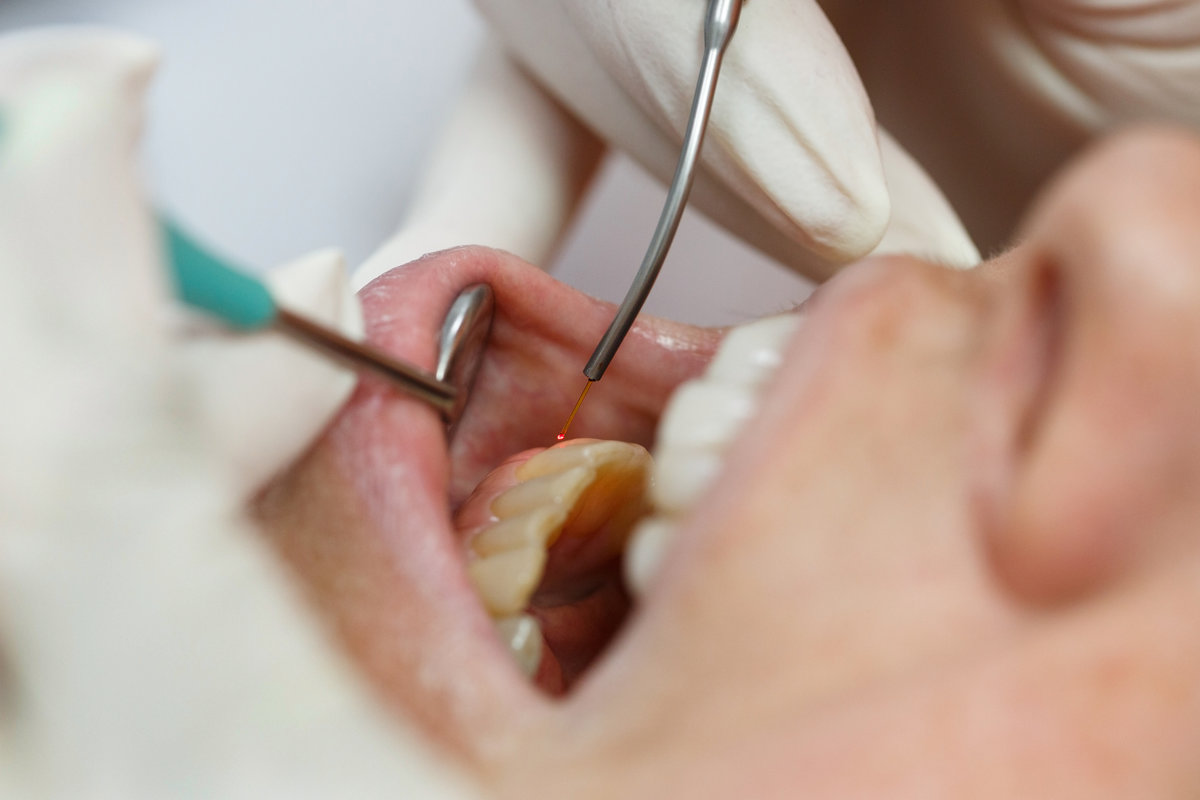
The procedure begins with a thorough periodontal examination and mapping of the pockets around each affected tooth. Local anesthetic is administered before any laser work begins. The fiber optic tip of the PerioLase, smaller than the width of a human hair at its working end, is inserted gently into the periodontal pocket alongside the tooth root.
The laser passes through the pocket twice. The first pass removes diseased tissue and eliminates bacteria selectively. Between passes, root surfaces are cleaned with ultrasonic instruments to remove calculus. The second laser pass creates a stable fibrin clot at the base of the pocket, which seals it against reinfection and provides a scaffold for tissue reattachment. No sutures are required in most cases.
Why Dr. Kamel’s Background Matters for This Procedure
Dr. Michelle Kamel completed her Doctor of Dental Surgery at NYU with honors in periodontics and went on to complete a post-doctoral program in periodontics and dental implants at NYU as well. Her training is specifically concentrated in the structures that periodontal treatment is designed to preserve: the gum tissue, the periodontal ligament, and the alveolar bone that supports every tooth in the arch.
That foundation shapes how she applies the PerioLase. The technology delivers precise, targeted energy, but the outcomes still depend on accurate pocket mapping, correct laser settings, thorough root debridement, and careful follow-up protocol. Training in periodontics provides the clinical judgment that makes the technology work as well as the research suggests it can.
Recovery Compared to Traditional Surgery
Patients who have undergone traditional periodontal surgery often describe the recovery as the hardest part: sutures, swelling, dietary restrictions, and sensitivity that can last for weeks. The PerioLase protocol typically involves significantly less post-procedure discomfort. Most patients return to normal activities the same day, and dietary restrictions are mild and short-lived.
Some soreness and sensitivity is still normal in the days following the procedure as the tissue heals. The absence of surgical incisions means the healing process is less disruptive overall, and the risk of post-operative infection is lower because the laser has already sterilized the treatment area.
What Laser Therapy Can Treat at Dental West NYC
Beyond gum disease, the PerioLase MVP-7 is used at our practice for mouth ulcer treatment, which can reduce healing time dramatically and provide immediate pain relief. The laser is also used in procedures related to FDA-cleared bone regrowth and in preparation for dental implant placement when gum and bone health need to be established first.
Not every patient with gum disease is a candidate for laser treatment. The severity of disease, the depth of the pockets, and the overall condition of the bone are all factors in the recommendation. Dr. Walter and Dr. Kamel will give you a clear picture of what treatment makes sense for your specific situation.
Schedule an Evaluation at Dental West NYC
If you have been diagnosed with gum disease or have been told you need periodontal surgery, it’s worth discussing whether the PerioLase approach to gum disease treatment is appropriate for your case. The evaluation is straightforward and gives you the information you need to make a confident decision.
Schedule an appointment online with Dr. Walter and Dr. Kamel at our Upper West Side office. We’re here to answer your questions and walk you through what treatment would look like for your specific situation.
Is LANAP with the PerioLase FDA cleared?
Yes. The PerioLase MVP-7 and the LANAP protocol are FDA cleared for periodontal treatment, including for true periodontal regeneration. It is one of the few periodontal procedures with clinical evidence of new bone, cementum, and periodontal ligament formation.
Does laser gum treatment hurt?
Local anesthetic is administered before the procedure begins, so discomfort during treatment is minimal. Post-procedure soreness is generally milder than after traditional surgery. Most patients describe sensitivity and mild discomfort for a few days rather than the more significant recovery associated with scalpel-based procedures.
How many appointments does LANAP treatment require?
Most patients complete the active treatment in two appointments, each covering one side of the mouth. Follow-up appointments are then scheduled to monitor healing and measure changes in pocket depth. The number of maintenance visits depends on the severity of the initial disease and how well the tissue responds.
Can laser treatment replace the need for dental implants?
In some cases, laser periodontal treatment can stabilize teeth that might otherwise require extraction, preserving the natural tooth. However, if a tooth has already been lost or is too compromised to save, implants remain the standard for replacement. The two treatments address different problems and are not interchangeable.